Anthropic 频繁警告 AI 风险或触发出口禁令
How Anthropic may have talked itself into an AI export ban
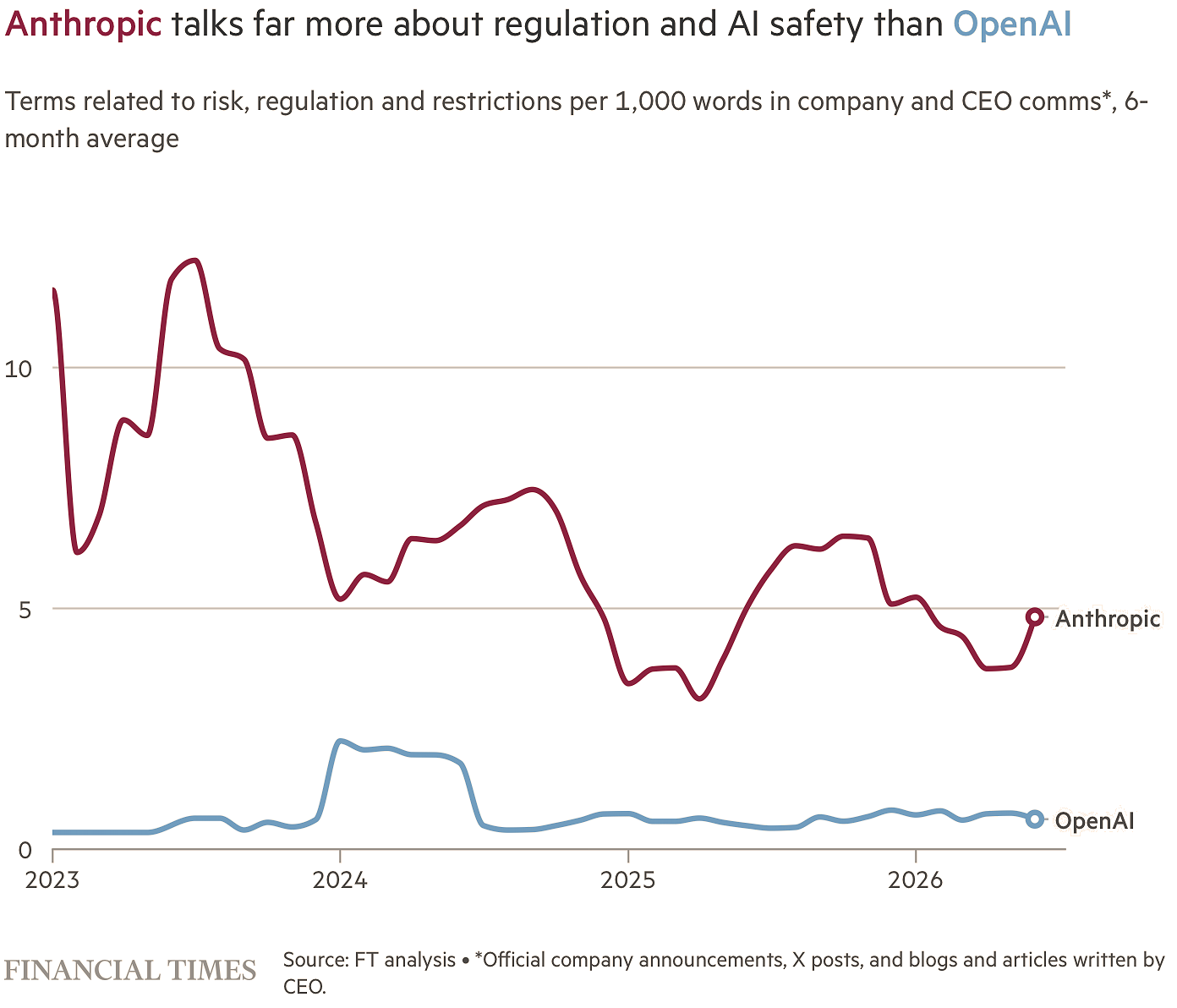
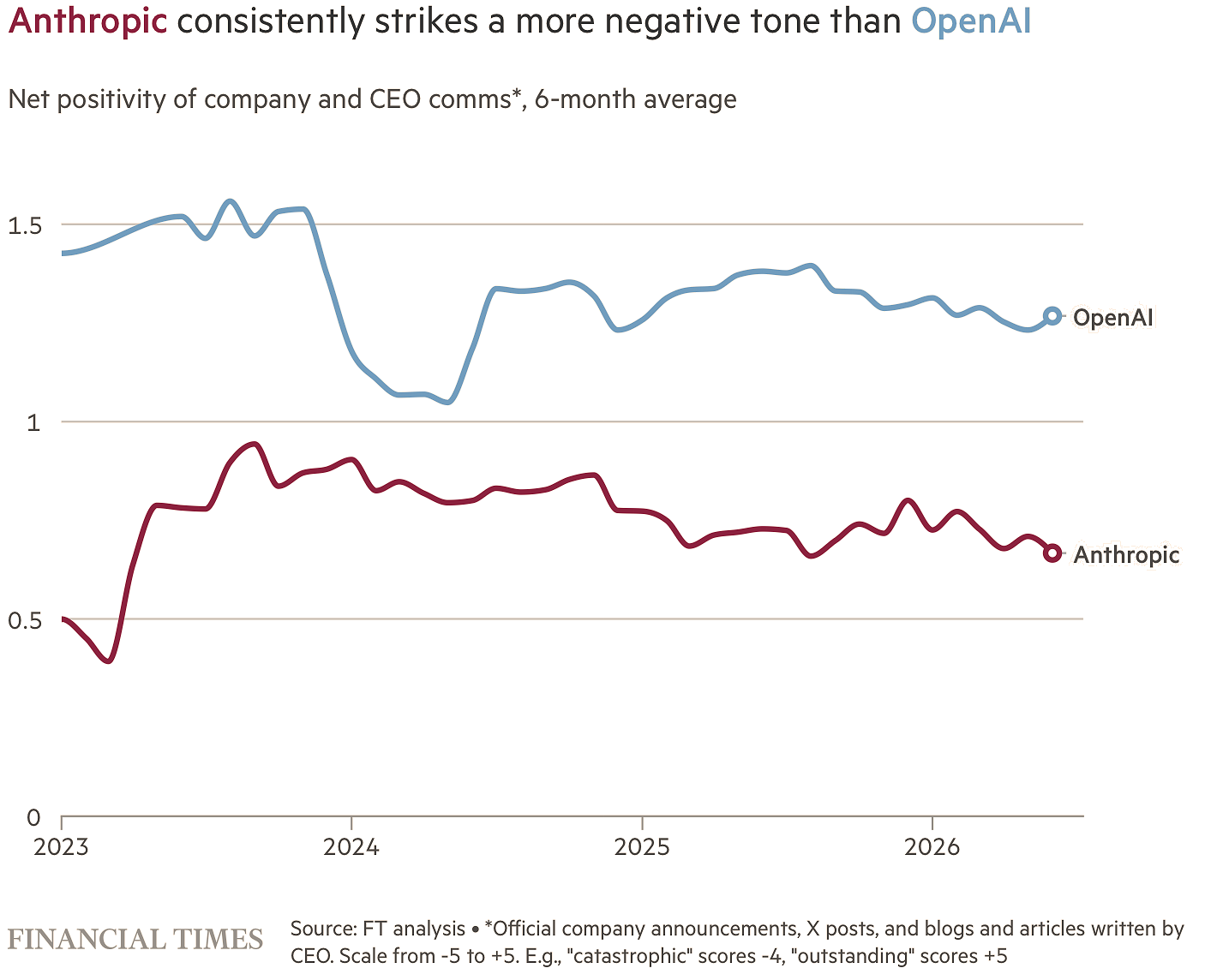
FT分析显示,Anthropic在2026年官方声明、社媒和文章中每千词有5个风险/监管词汇,是OpenAI(0.6个)的8倍。上周美国禁止外国人使用Anthropic最新模型Mythos和Fable。批评者指责Anthropic及其CEO Dario Amodei反复警告AI危险,特别是Mythos的安全风险,直接促成禁令。Yann LeCun称这是“荒谬的恐惧营销”的结果。David Sacks则称Anthropic曾淡化对Fable安全措施的担忧。Amodei在禁令前发文称AI风险和威力已不可否认。该禁令被视为美国监管前沿模型的早期测试。
FT用词频统计证实Anthropic的风险话语密度远高于OpenAI,而正是这种自我加压引来了出口禁令,这件事是AI全球治理的一块试金石。
Anthropic has warned about the dangers of advanced AI far more often than rival OpenAI this year, according to FT analysis, as critics accuse the company of helping to trigger a US ban on foreign access to its newest models.
Five in every 1,000 words used by Anthropic in 2026 related to risk, regulation, or restrictions, according to FT research that analyzed official statements, social media posts, and articles written by the company or its chief, Dario Amodei. The equivalent figure for OpenAI and Sam Altman was eight times lower, at 0.6 words per 1,000.
The comparison has become politically charged after Washington last week barred foreign nationals from using Anthropic’s latest models, Mythos and Fable. Some technologists have blamed the decision on the $965 billion AI group’s repeated warnings about AI’s risk to society—particularly in relation to Mythos.
Yann LeCun, Meta’s former chief AI scientist and one of AI’s pioneers, said this week the export ban showed that Amodei’s “ridiculous fear-mongering” about AI had finally paid off. “One reaps what one sows,” he wrote in a social media post a week ago.
The dispute has alarmed parts of Europe and Silicon Valley, where executives and officials fear the Trump administration may be willing to restrict non-US access to frontier models. It is emerging as an early test of how the US intends to oversee increasingly powerful AI models.
Credit: Financial Times
Credit: Financial Times
The FT created lists of terms including “harmful,” “dangerous,” and “misaligned” and calculated how frequently they appeared in statements by each company or its CEO. It also used sentiment analysis to compare the positive and negative tone of communications.
The research found that in Anthropic’s communications in 2026, “risk” appeared 336 times; “safeguard,” 121 times; and “vulnerability,” 128 times. At OpenAI, these terms were used 30, 33, and 10 times, respectively.
When asked about Mythos in a podcast interview in April, Altman said: “It is clearly incredible marketing to say, ‘We have built a bomb. We are about to drop it on your head.’”
Credit: Financial Times
Credit: Financial Times
Anthropic has long sought to position itself as the AI industry’s conscience. It frequently releases research papers and statements about the potential harms of the technology. It has also repeatedly called for greater government intervention.
Days before the export ban, Amodei published a long blog post on his personal website arguing that regulators were moving too slowly on AI.
“In the last few months… the evidence of AI’s incredible power, as well as its risks, has become undeniable,” he wrote, adding that Mythos demonstrated “very real risks to cyber security, creating the potential for disruption of the financial sector, critical infrastructure, and national security.”
But the post was far from the “doomiest” Anthropic publication analyzed by the FT. A news item from April 2025 about rare AI behaviors, such as sabotage or providing information about weapons, contained roughly three times more negative language.
The FT analysis also found that Anthropic had softened its language significantly since 2023, as its AI tools had gained popularity. Its use of risk and regulation-related language has roughly halved from the same period in 2023.
Overall, the data showed that while Anthropic’s public communications were largely positive in tone, they were less so than OpenAI’s.
来源:Ars Technica:AI(RSS) · arstechnica.com